糸 thread
シ・いと
ORIGIN 糸 began as fine silk strands twisted together. Its family includes tying thread, textiles made from it, and even their colors.
Origin referenceJLPT N3 · THREAD / CONNECTION
糸 began as a picture of fine silk strands drawn from a cocoon and twisted together. The shape preserves a trace of making thread by hand. As a component, 糸 can lead you to thread, cloth and connections.
Follow thread into cord, lines, embroidery and color.

シ・いと
ORIGIN 糸 began as fine silk strands twisted together. Its family includes tying thread, textiles made from it, and even their colors.
Origin referenceサイ・ほそい・こまかい
MEANING + SOUND 糸 connects to a fine thread. The right-hand 田 developed from the earlier sound component 囟; it is not a rice field here. Thin thread also helps connect 細 to fine detail.
Origin referenceソ・くむ・くみ
MEANING + SOUND 糸 is the material and 且 the sound component. Braiding strands into a cord connects to combining things. Making a group of people also brings separate elements together.
Origin referenceセン
MEANING + SOUND 糸 contributes a long thin thread and 泉 sound. That thread connects to a line drawn on paper. Visualizing a strand makes the abstract line easier to remember.
Origin referenceカイ・え
MEANING + SOUND Why does a picture contain thread? 絵 originally connected with embroidery using colored threads. 会 supplies sound. Pictures can be made with thread as well as with a brush and paint.
Origin referenceケツ・むすぶ
MEANING + SOUND 糸 is the material and 吉 the sound component. Tying strands firmly together connects to joining people or things. Start with the visible knot.
Origin referenceリョク・みどり
MEANING + SOUND 糸 combines with a sound component developed from 彔. 緑 originally referred to green silk. Dyed fabric explains the thread in this color character. The Shiba's scarf is green too.
Origin referenceレン・ねる
MEANING + SOUND The older form used 柬 as its sound component. Treating silk to make it soft and lustrous connects to refining. 練習 likewise involves repeated work to improve a skill.
Origin referenceシ・かみ
ORIGIN 紙 combines 糸 with 氏, a SHI sound component. 紙 also has the on-reading SHI, as in 用紙 (ようし), paper.
Origin referenceシュウ・おわる
ORIGIN Kanjipedia connects 終 with thread and a component that earlier depicted a knot. Tie off the end of the thread: that is where it finishes. This concrete ending extends to finishing other things. The right side now looks like 冬, but the origin is not simply “thread plus the winter season.”
Origin referenceBoth 絵 and 緑 contain thread. Their older connections with thread and silk bring seemingly unrelated modern words together.
Radical origin reference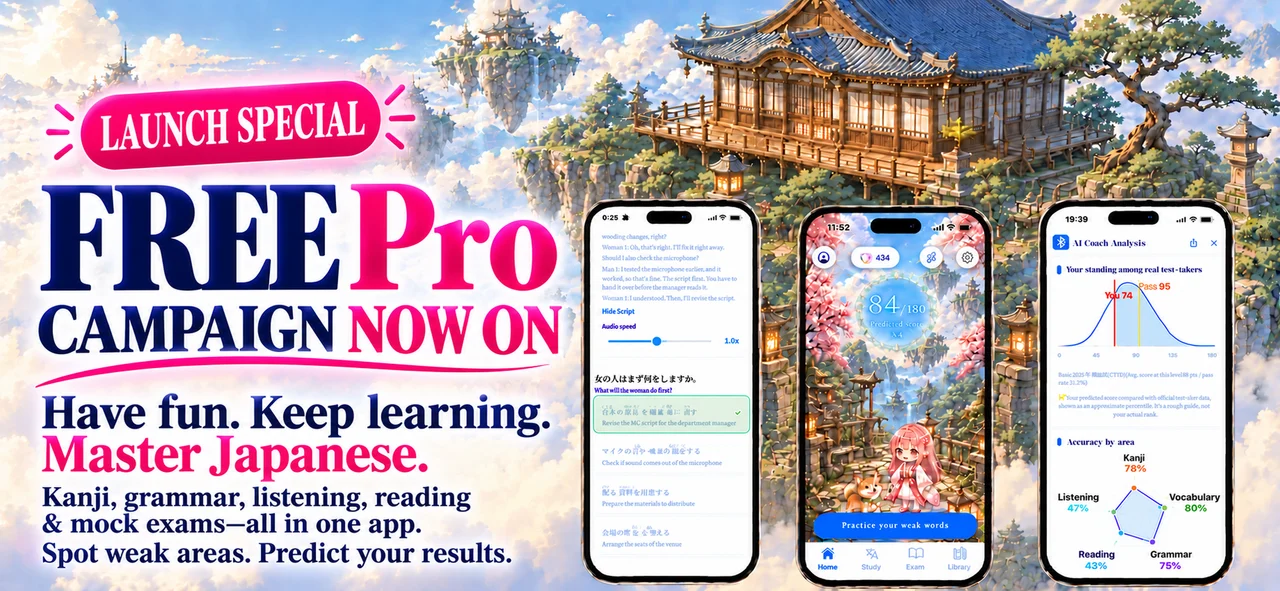
Launch special
Study kanji, vocabulary, grammar, listening, reading and mock exams in one app. Use Pro features for free during the campaign.
Available worldwide except Nepal. Regions and campaign details may change. Check the app for current availability.