清 clear / pure
セイ・きよい
- 氵 water
- 青 SEI sound
ORIGIN 氵 contributes water and 青 supplies the SEI sound. 清 describes clear water, extending to purity. Its parts are doing two different jobs: meaning and sound.
Origin referenceJLPT N3 · WATER
水 becomes 氵 on the left. It gives a water-related meaning clue. A meaning-bearing part is called an 意符 (semantic component).
Bodies of water, swimming and liquids to drink: expand one 氵 family.

セイ・きよい
ORIGIN 氵 contributes water and 青 supplies the SEI sound. 清 describes clear water, extending to purity. Its parts are doing two different jobs: meaning and sound.
Origin referenceコ・みずうみ
MEANING + SOUND 氵 identifies water and 胡 supplies sound. The radical gives the family, but you still need the rest of the character to distinguish a lake from the sea. Learn 湖 as みずうみ and 海 as うみ.
Origin referenceエイ・およぐ
MEANING + SOUND 氵 is water; 永 contributes both a long flow and sound. The character connects to swimming along a current. The エイ in 永遠 and 水泳 also shows a sound relationship.
Origin referenceハ・なみ
MEANING + SOUND 氵 supplies water and 皮 sound. “The skin of water” may be a memory story, but it is not the historical construction. The character combines a meaning component with a sound component.
Origin referenceコウ・みなと
MEANING + SOUND 氵 contributes water and 巷 sound. A water passage for boats connects to a harbor. Think of the waterside where boats come and go, rather than a road for people.
Origin referenceシン・ふかい
MEANING + SOUND 氵 combines with the sound component 罙. Originally a river name, the character was borrowed for deep water. It can also describe less visible depth, such as deep thought.
Origin referenceオン・あたたかい
MEANING + SOUND 氵 is paired with a simplified older sound component. 温 originally named a river and was later borrowed for “warm.” Start with warm water, then connect it with a warm heart.
Origin referenceトウ・ゆ
MEANING + SOUND 氵 supplies water and 昜 sound. 水 and 湯 refer to water at different temperatures. Treat the right side as one sound component rather than inventing a story from its individual strokes.
Origin referenceシュ・さけ
MEANING + SOUND 氵 connects to liquid; 酉 relates to wine and also contributes sound. This shows that 氵 includes liquids people drink, not only rivers and lakes.
Origin referenceユ・あぶら
MEANING + SOUND 氵 and the sound component 由 originally formed a river name. Later the character was used for oil. Even a liquid that does not mix readily with water can belong to the 氵 family.
Origin referenceチ・いけ
ORIGIN 池 combines a water meaning part with 也 as a sound part. Its on-reading is CHI. Here 也 points toward CHI; this does not mean that 也 by itself is always read CHI.
Origin referenceヨウ
MEANING + SOUND 氵 gives a water clue; 羊 gives the sound YŌ. It does not mean sheep in the sea. Hear YŌ in 海洋 (かいよう), ocean.
Origin referenceカイ・うみ
MEANING + SOUND 氵 identifies water; 毎 is the sound component. 海 is the vast, deep sea. Here 毎 is not added with its everyday meaning “every.”
Origin referenceチュウ・そそぐ
MEANING + SOUND 氵 and the sound component 主 form a character for pouring water. In 注意, you direct your attention rather than water. Connect the physical action of pouring with focusing your mind.
Origin referenceカン
MEANING + SOUND Why does 漢 in 漢字 contain water? 漢 originally named a river; the name also came to designate a region and a dynasty. 氵 preserves that river connection. The right side developed from an older sound component.
Origin referenceスイ・みず
ORIGIN 水 began as flowing water. On the left it becomes the three strokes of 氵. Its shape changes, but the connection with water remains.
Origin referenceConnect the component clues with the meaning and audio of each word.
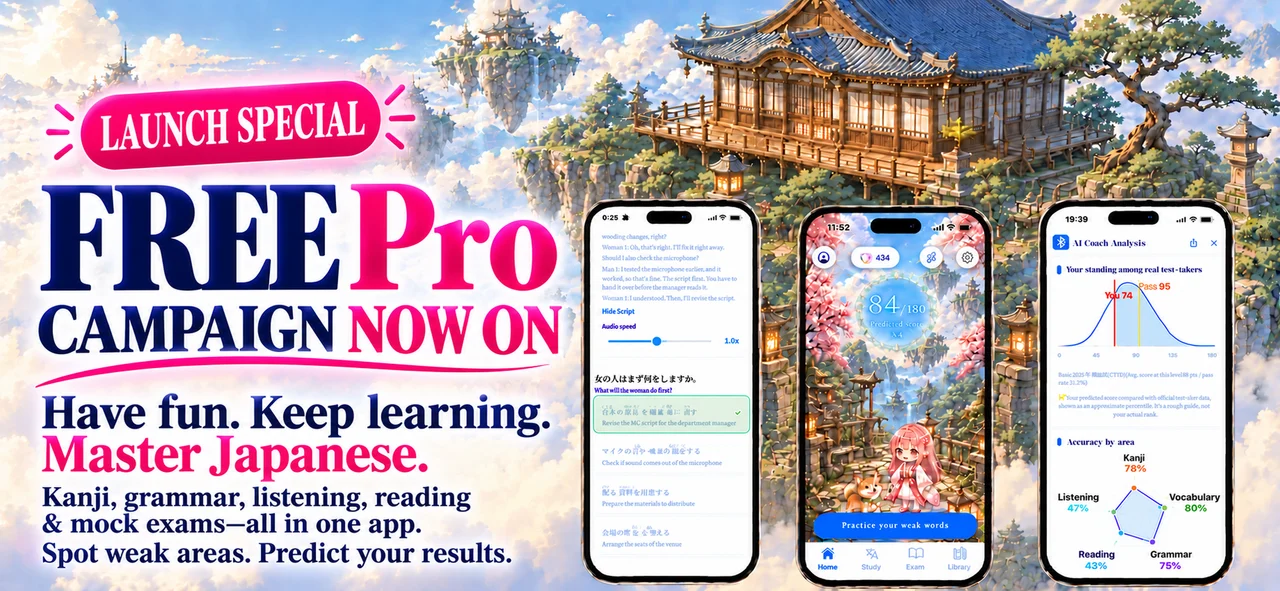
Launch special
Study kanji, vocabulary, grammar, listening, reading and mock exams in one app. Use Pro features for free during the campaign.
Available worldwide except Nepal. Regions and campaign details may change. Check the app for current availability.