働 work
ドウ・はたらく
- 亻 person
- 動 movement / DŌ
ORIGIN 亻 contributes a person and 動 contributes movement or activity. Together they express a person working. 動 also connects to the DŌ reading. 働 is a character created in Japan.
Origin referenceJLPT N3 · PERSON
人 means person. On the left it becomes 亻. Think of a person or something a person does.
People work, trust and connect. Organize the 亻 family through actions and relationships.

ドウ・はたらく
ORIGIN 亻 contributes a person and 動 contributes movement or activity. Together they express a person working. 動 also connects to the DŌ reading. 働 is a character created in Japan.
Origin referenceイ・くらい
ORIGIN 亻 is a person and 立 standing. A person's place at court indicated rank. That concrete standing position helps connect rank with the modern word 位置, position.
Origin referenceチュウ・なか
MEANING + SOUND 亻 is a person; 中 contributes being in between as well as sound. The earlier sense connected with a child between the eldest and youngest. Extend the idea to relationships between people in 仲間.
Origin referenceタ・ほか
MEANING + SOUND 亻 is a person; 也 developed from an older component contributing sound and “other.” The earlier sense concerned people of another group. The same visible 也 in 池 does not guarantee the same reading.
Origin referenceベン・ビン
ORIGIN 亻 is a person and 更 connects with changing or correcting. Improving something inconvenient for a person makes it easier to use. Those two meanings connect to 便利.
Origin referenceシン
ORIGIN 亻 is a person and 言 words. A person's words connect to truth and trust. Here 言 contributes meaning too: this is a combination of two meaningful parts.
Origin referenceケイ・かかり
MEANING + SOUND 亻 is a person; 系 contributes connecting as well as sound. The character represents human connections. 関係 is a relationship; a 係 is the person responsible for a particular task.
Origin referenceレイ・たとえる
MEANING + SOUND 亻 is a person; 列 contributes a row or grouping and sound. Grouping people of the same kind connects to examples and precedents. 例えば introduces a concrete example.
Origin referenceトウ・たおれる
MEANING + SOUND 亻 is a person; 到 contributes sound and a connection with falling. Picture a standing person falling over. The person family includes positions and bodily actions as well as social roles.
Origin referenceタイ・からだ
MEMORY STORY Today’s shape is 亻 + 本. “A person’s foundation is their body” is a memory aid for that shape, not its historical origin. 体 is used in place of an older form containing a bone component. Modern shape and historical formation are different things.
Origin referenceジュウ・すむ
MEANING + SOUND 亻 represents a person; 主 provides the sound clue. Staying in one place connects to residing there. This character focuses on the person who lives somewhere.
Origin referenceシ・つかえる
MEANING + SOUND 士 refers to a person serving in an office and also contributes sound. With 亻, it connects to serving or doing one's work. Remember the 仕 of 仕事 through a person's role.
Origin referenceダイ・タイ・かわる
MEANING + SOUND 亻 is a person and 弋 the sound component. A substitute person gives a concrete starting point for the idea of replacement. Other words containing 代 need their own meanings learned too.
Origin referenceシ・つかう
MEANING + SOUND 吏 connects with doing work and also supplies a sound clue. The earlier idea of a person working for someone leads to “use.” Actions and roles connect this character with the person family.
Origin referenceシャク・かりる
MEANING + SOUND 亻 represents a person; 昔 is the sound component, not “long ago.” Picture the people involved in borrowing and lending, then learn the verb 借りる.
Origin referenceテイ・ひくい
MEANING + SOUND 氐 contributes both sound and the idea of reaching. The connection is to reaching down toward the ground, hence “low.” Use 低い in contrast with 高い.
Origin referenceサク・サ・つくる
MEANING + SOUND 乍 contributes the idea of making as well as sound. Adding a person gives 作. Connect it to a person's action of making something.
Origin referenceジン・ニン・ひと
ORIGIN 人 began as a side view of a human body. On the left of another kanji it becomes 亻. Recognize that person first in 休 and 何.
Origin referenceキュウ・やすむ
ORIGIN 亻 contributes a person; 木 contributes a tree. A person rests in the shade provided by the tree. The two meanings form a scene of resting. Add む to 休 to write the verb やすむ.
Origin referenceカ・なに・なん
MEANING + SOUND 亻 represents a person; 可 supplies a sound clue. The character originally referred to carrying a load. It was later borrowed to write “what?” A kanji's current meaning cannot always be predicted from its shape.
Origin referenceConnect the component clues with the meaning and audio of each word.
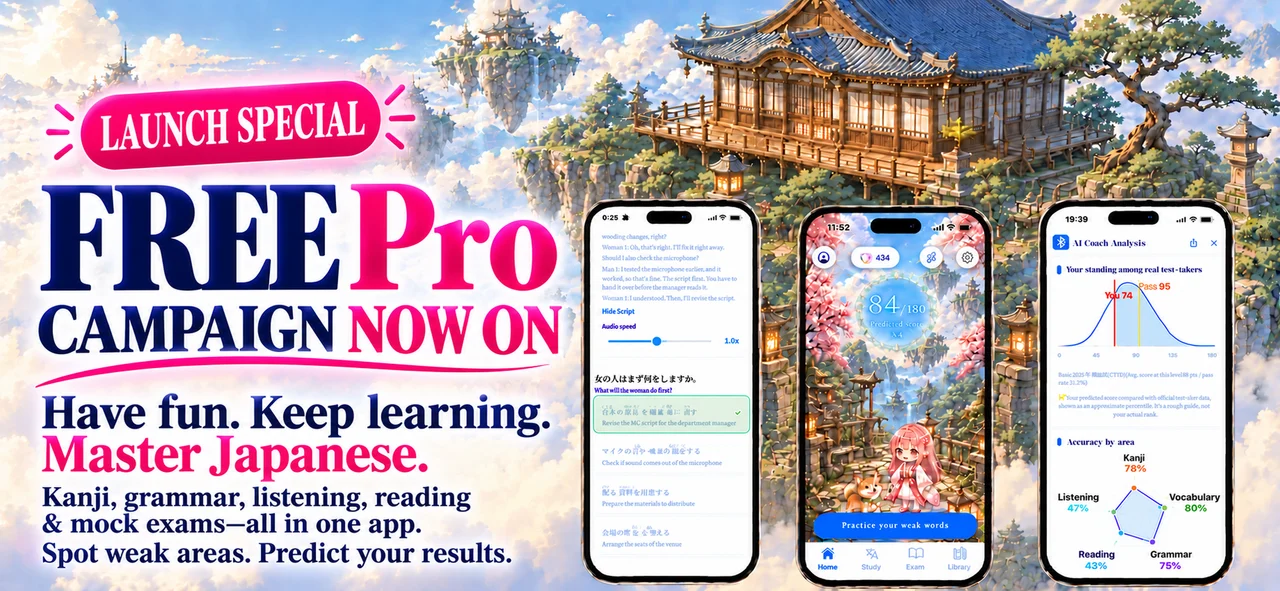
Launch special
Study kanji, vocabulary, grammar, listening, reading and mock exams in one app. Use Pro features for free during the campaign.
Available worldwide except Nepal. Regions and campaign details may change. Check the app for current availability.