打 hit
ダ・うつ
- 扌 hand
- 丁 sound part
MEANING + SOUND 扌 contributes a hand and 丁 sound. 打 means hitting forcefully. Whether hitting a ball or a drum, the hand action provides a shared connection.
Origin referenceJLPT N3 · HAND / ACTION
手 becomes 扌 on the left. Learn actions done with your hands as a family.
Hit, pick up, point and push: organize hand actions together.

ダ・うつ
MEANING + SOUND 扌 contributes a hand and 丁 sound. 打 means hitting forcefully. Whether hitting a ball or a drum, the hand action provides a shared connection.
Origin referenceシュウ・ひろう
MEANING + SOUND 扌 is a hand and 合 the sound component. 拾 connects to gathering things up by hand. Do not treat 合 only as its everyday meaning “combine.”
Origin referenceシ・ゆび・さす
MEANING + SOUND 扌 identifies the hand and 旨 supplies sound. The finger leads naturally to the action of pointing with it. Learn the body part and its action together.
Origin referenceオウ・おす
MEANING + SOUND 扌 is a hand and 甲 the sound component. The character connects to pressing with the hand. A button or door provides a practical scene for learning 押す.
Origin referenceショウ・まねく
MEANING + SOUND 扌 is a hand; 召 contributes calling and sound. Calling someone over with a hand gesture gives 招. The two meanings form one action.
Origin referenceジュ・さずける
MEANING + SOUND 受 connects with receiving and giving and also supplies sound. With 扌, 授 concerns handing something over. In 授業, the connection extends to imparting knowledge.
Origin referenceジ・もつ
MEANING + SOUND 扌 tells you it involves a hand; 寺 gives a JI sound clue. 持 means hold. The two parts can have different jobs: meaning and sound.
Origin referenceシュ・て
ORIGIN 手 began as an open hand. On the left it becomes 扌. This family helps you group actions done with a hand, such as holding and hitting.
Origin referenceWhen you see 扌, think of a hand action. The right side often supplies sound, so the hand alone cannot determine the meaning.
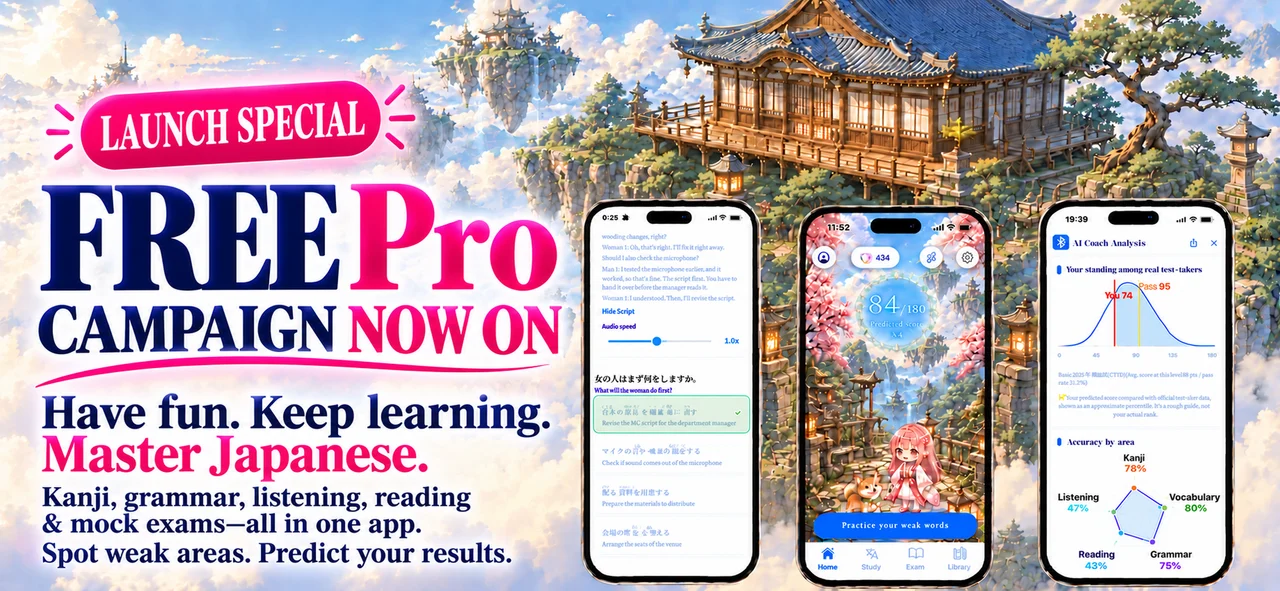
Launch special
Study kanji, vocabulary, grammar, listening, reading and mock exams in one app. Use Pro features for free during the campaign.
Available worldwide except Nepal. Regions and campaign details may change. Check the app for current availability.