忙 busy
ボウ・いそがしい
- 忄 mind / feelings
- 亡 BŌ sound
ORIGIN Memory story: so busy that you lose your peace of mind. Historically, 心 supplies meaning and 亡 supplies sound. Use both the vivid story and the sound–meaning structure.
Origin referenceJLPT N3 · HEART / FEELINGS
心 began as a picture of the heart, which ancient people associated with thought and feeling. On the left it takes the form 忄. The shape changes, while its connection to states of mind remains.
“So busy that you lose your peace of mind.” One vivid scene makes 忙 memorable.

ボウ・いそがしい
ORIGIN Memory story: so busy that you lose your peace of mind. Historically, 心 supplies meaning and 亡 supplies sound. Use both the vivid story and the sound–meaning structure.
Origin referenceジョウ・セイ
MEANING + SOUND 忄 points to feelings. 青 is a sound component, but this does not mean “青 = JŌ.” 情 is JŌ in 感情 (かんじょう), unlike SEI in 晴 and 清.
Origin referenceセイ・ショウ
MEANING + SOUND 忄 is the mind; 生 contributes both sound and being born. Together they connect to one's inborn nature. 性格 names a person's characteristic personality.
Origin referenceカイ・こころよい
MEANING + SOUND 忄 is the heart and 夬 the sound component. 快 describes feeling cheerful or pleasant. The relief you feel in a comfortable room connects 快適 with this heart-family character.
Origin referenceフ・こわい
MEANING + SOUND 忄 represents feeling and 布 supplies sound. The origin is not “being afraid of cloth.” Connect the character with the fear you feel on hearing a frightening story.
Origin referenceカン・なれる
MEANING + SOUND 忄 connects to the mind; 貫 contributes sound. Link 慣れる with repeated experience: what felt unfamiliar gradually becomes comfortable. This everyday association helps you remember the word.
Origin referenceThe 青 family: 晴 and 清 can be SEI, while 情 is JŌ in 感情. A shared sound part does not guarantee an identical modern reading. Treat it as a candidate and confirm with word audio.
Radical origin reference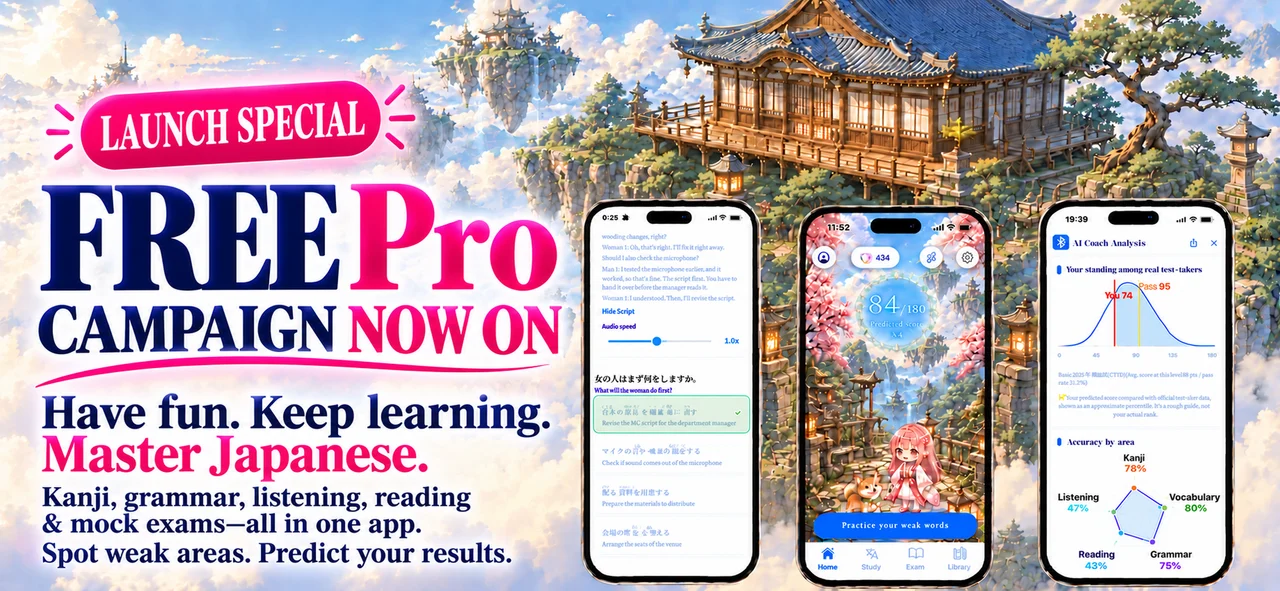
Launch special
Study kanji, vocabulary, grammar, listening, reading and mock exams in one app. Use Pro features for free during the campaign.
Available worldwide except Nepal. Regions and campaign details may change. Check the app for current availability.