明 bright
メイ・あかるい
- 日 sunlight
- 月 moonlight
ORIGIN 日 supplies sunlight and 月 supplies moonlight. Both parts contribute light, and together express brightness. Kanjipedia explains this form of 明 as a combination of those meanings.
Origin referenceJLPT N4 · SUN / TIME
日 began as a picture of the sun. It also relates to time, as in one day.
Brightness, time and hot weather: a family growing from the sun.

メイ・あかるい
ORIGIN 日 supplies sunlight and 月 supplies moonlight. Both parts contribute light, and together express brightness. Kanjipedia explains this form of 明 as a combination of those meanings.
Origin referenceソウ・はやい
MEMORY STORY Picture yourself waking early as the sun rises. This is a memory aid for today’s shape. Kanjipedia gives a different historical account: the character originally depicted a spoon and was borrowed to express “early.”
Origin referenceニチ・ジツ・ひ
ORIGIN 日 began as a picture of the sun. Its rising and setting mark a day. That connection helps you recognize 日 in characters for dates and time.
Origin referenceヨウ
MEANING + SOUND 日 supplies the light connection and 翟 the sound. 曜 originally referred to shining. In weekday names, the shared 曜 lets you group 日曜, 月曜 and 火曜 together.
Origin referenceエイ・うつる
MEANING + SOUND 日 and the sound component 央 connect first to shining sunlight and then to reflected or projected images. A film also shows images using light.
Origin referenceショ・あつい
MEANING + SOUND 日 points to the sun and 者 supplies sound. 暑い describes hot weather. Contrast a hot day, 暑い日, with a hot drink, 熱いお茶.
Origin referenceジ・とき
MEANING + SOUND 日 points to time. 寺 has the on-reading JI, and 時 is also JI, as in 一時 (いちじ).
Origin reference明るい means bright; 早い means early. A shared 日 helps organize them, while each complete character and word gives its own meaning.
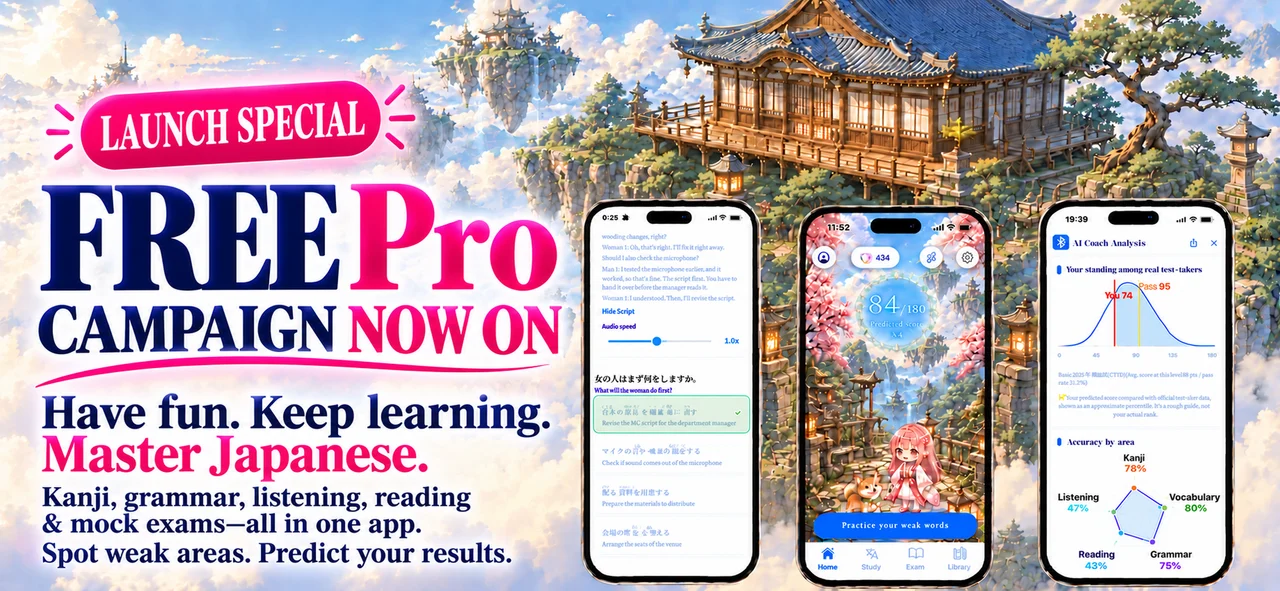
Launch special
Study kanji, vocabulary, grammar, listening, reading and mock exams in one app. Use Pro features for free during the campaign.
Available worldwide except Nepal. Regions and campaign details may change. Check the app for current availability.